

![The Arctic Circle is one of the five major circles of latitude that mark maps of the Earth. As of 16 February 2015, it runs 66°33′45.6″ north of the Equator.
The region north of this circle is known as the Arctic, and the zone just to the south is called the Northern Temperate Zone. The equivalent polar circle in the Southern Hemisphere is called the Antarctic Circle.
The Arctic Circle is the southernmost latitude in the Northern Hemisphere at which the sun can remain continuously above or below the horizon for 24 hours (at the June solstice and December solstice respectively). North of the Arctic Circle, the sun is above the horizon for 24 continuous hours at least once per year (and therefore visible at midnight) and below the horizon for 24 continuous hours at least once per year (and therefore not visible at noon). On the Arctic Circle those events occur, in principle, exactly once per year, at the June and December solstices, respectively. However, in practice, because of atmospheric refraction and mirages, and because the sun appears as a disk and not a point, part of the midnight sun may be seen on the night of the northern summer solstice up to about 50′ (90 km (56 mi)) south of the Arctic Circle; similarly, on the day of the northern winter solstice, part of the sun may be seen up to about 50′ north of the Arctic Circle. That is true at sea level; those limits increase with elevation above sea level, although in mountainous regions there is often no direct view of the true horizon.
The position of the Arctic Circle is not fixed. It directly depends on the Earth's axial tilt, which fluctuates within a margin of 2° over a 40,000-year period,[2] notably due to tidal forces resulting from the orbit of the Moon. The Arctic Circle is currently drifting northwards at a speed of about 15 m (49 ft) per year; see Circle of latitude for more information.
#snow](https://images.trvl-media.com/place/6140564/a9f9449e-bab4-40a6-a9a1-5356b0cc2aa8.jpg?impolicy=fcrop&w=1200&h=500&q=medium)
相片由 Sharrie Shaw 提供
尼基斯基提供無線上網的飯店,旅行前必看!
 改變心意預訂可以免費取消的飯店
 精挑細選搜尋全球約 100 萬間旅宿
查看尼基斯基提供無線上網的飯店供應情況
人氣尼基斯基提供無線上網的飯店住宿優惠推薦低至最低 NT$2,201 起




基奈上城汽車旅館
Kenai
8.6 分,滿分 10 分,有夠讚,(295)
「Great place to stay! 」

Edward
現在價格為 NT$2,780
總價 NT$2,947
含稅金和其他費用
12 月 14 日 - 12 月 15 日




基奈凱藝飯店
Kenai
8.4 分,滿分 10 分,非常好,(566)
「还可以吧!」

rrzh
現在價格為 NT$3,066
總價 NT$3,250
含稅金和其他費用
12 月 24 日 - 12 月 25 日




冬眠站飯店
Sterling
9.2 分,滿分 10 分,太棒了,(47)
「This place was perfect gor us to stage outings from Coopers Landing to Homer. The motel was clean with wooden floors that reminded me of my childhood cabin. The staff was very helpful. If your fishing the Kenai peninsula, this is a great place to base your outings. 」
James
現在價格為 NT$2,390
總價 NT$2,462
含稅金和其他費用
12 月 8 日 - 12 月 9 日




基奈阿斯潘長住飯店
Kenai
9.0 分,滿分 10 分,太棒了,(710)
「The staff was friendly and professional 」
Juanita




索爾多特納Lodge飯店
Soldotna
6.0分,滿分 10,(37)
「Looking forward to our next time」
Ann
現在價格為 NT$2,137
總價 NT$2,201
含稅金和其他費用
12 月 8 日 - 12 月 9 日




貝斯特韋斯特國王鮭飯店
Soldotna
8.2 分,滿分 10 分,非常好,(377)
「Did not eat breakfast 」
Tom
現在價格為 NT$3,627
總價 NT$3,990
含稅金和其他費用
12 月 9 日 - 12 月 10 日




基奈機場飯店
Kenai
9.2 分,滿分 10 分,太棒了,(324)
「This was our second time staying at the Kenai Airport Hotel. Both the staff and rooms continue to be amazing! 」
Candice
現在價格為 NT$3,346
總價 NT$3,546
含稅金和其他費用
12 月 8 日 - 12 月 9 日



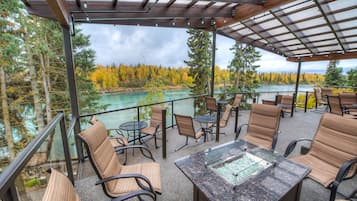
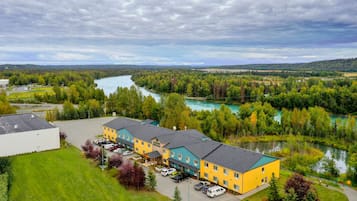
科乃河旅舍
Soldotna
8.4 分,滿分 10 分,非常好,(742)
「Good place for fishing!timming is very import than place .but nice place for kill fish .refigerate is bad,fish can't frzze」

tsao
現在價格為 NT$3,749
總價 NT$4,124
含稅金和其他費用
12 月 8 日 - 12 月 9 日








最低每晚價格是根據過去 24 小時以 2 位成人住宿 1 晚為條件所搜尋到的價格。價格和供應情況可能會有所變動,可能受到其他條款限制。